



Tired of straining to hear dialogue in your favorite movies or wishing your music had more punch? The answer might be simpler (and more affordable) than a full-blown home theater system: a soundbar. In this comprehensive guide, we’ll demystify the world of soundbars, exploring everything from their core functionality to the latest advancements in audio technology.
Soundbars have evolved significantly, offering immersive sound experiences that rival traditional surround sound setups, all within a sleek, space-saving design. We’ll delve into the key features to consider when choosing the right soundbar for your needs, including channel configuration (2.1, 3.1, 5.1, and beyond), Dolby Atmos and DTS:X support for immersive audio, connectivity options like HDMI eARC and Bluetooth, and even smart features like voice assistant integration.
Whether you’re a seasoned audiophile or simply looking to upgrade your TV’s lackluster audio, this guide provides the expert knowledge you need to make an informed decision. We’ll cut through the jargon, compare leading brands, and offer practical tips to help you find the perfect soundbar to elevate your entertainment experience. Get ready to unlock a richer, more engaging world of sound!
2 Top Soundbar Chart
| Product Name | Key Feature | Rating (out of 5) |
|---|---|---|
| Samsung B-Series Soundbar HW B400F 2.0 | Compact 2.0 Channel Sound | 4.0 |
| Bose TV Speaker – Soundbar for TV | Clear Dialogue & Enhanced Bass | 4.5 |
Best Soundbar Reviews
Samsung B-Series Soundbar HW B400F 2.0


The Samsung HW-B400F (2025 model) soundbar offers a compelling proposition for users seeking a simple and affordable audio upgrade for their television. This 2.0 channel soundbar, boasting a built-in woofer, aims to provide a balanced and robust sound experience without the need for separate, cumbersome components.
The inclusion of an integrated subwoofer is a significant advantage, particularly for smaller rooms where space is at a premium. While it’s unlikely to deliver the earth-shattering bass of a dedicated subwoofer, it should provide a noticeable improvement in low-end frequencies compared to most TV’s built-in speakers, adding depth and richness to movies, music, and games. The marketing focus on “robust, rich sound” should be interpreted with realistic expectations; this is an entry-level soundbar and won’t compete with higher-end systems in terms of sonic detail or dynamic range.
One of the key selling points is the “Voice Enhance Mode.” The promise of automatically amplified dialogue is appealing, especially for viewers who struggle to hear conversations amidst background music or sound effects. If implemented effectively, this feature could significantly improve the viewing experience by reducing the need to constantly adjust the volume. However, the effectiveness of such features often varies depending on the source content, and real-world testing will be crucial to assess its performance.
The “One Remote Control” functionality is another attractive feature for Samsung TV owners. The ability to control the soundbar’s power, volume, and potentially other settings using the TV’s remote simplifies the user experience and reduces clutter. However, the fine print specifying compatibility only with select Samsung TVs (requiring reference to samsung.com for verification) is a crucial detail that potential buyers must carefully consider. Similarly, Bluetooth connectivity with Samsung TVs requires specific models, further emphasizing the importance of verifying compatibility before purchase.
Overall, the Samsung HW-B400F appears to be a decent entry-level soundbar for users prioritizing simplicity and ease of use. Its built-in subwoofer and voice enhancement features are welcome additions, and the One Remote Control functionality offers added convenience for compatible Samsung TV owners. However, prospective buyers should carefully review the compatibility requirements listed on Samsung’s website to ensure that the soundbar will seamlessly integrate with their existing television setup. While it won’t deliver audiophile-grade performance, it’s likely to be a significant improvement over standard TV speakers, particularly in the bass and clarity departments.
✅ Pros
- High quality
- Good value
❌ Cons
- Pricey
- Heavy
Bose TV Speaker – Soundbar for

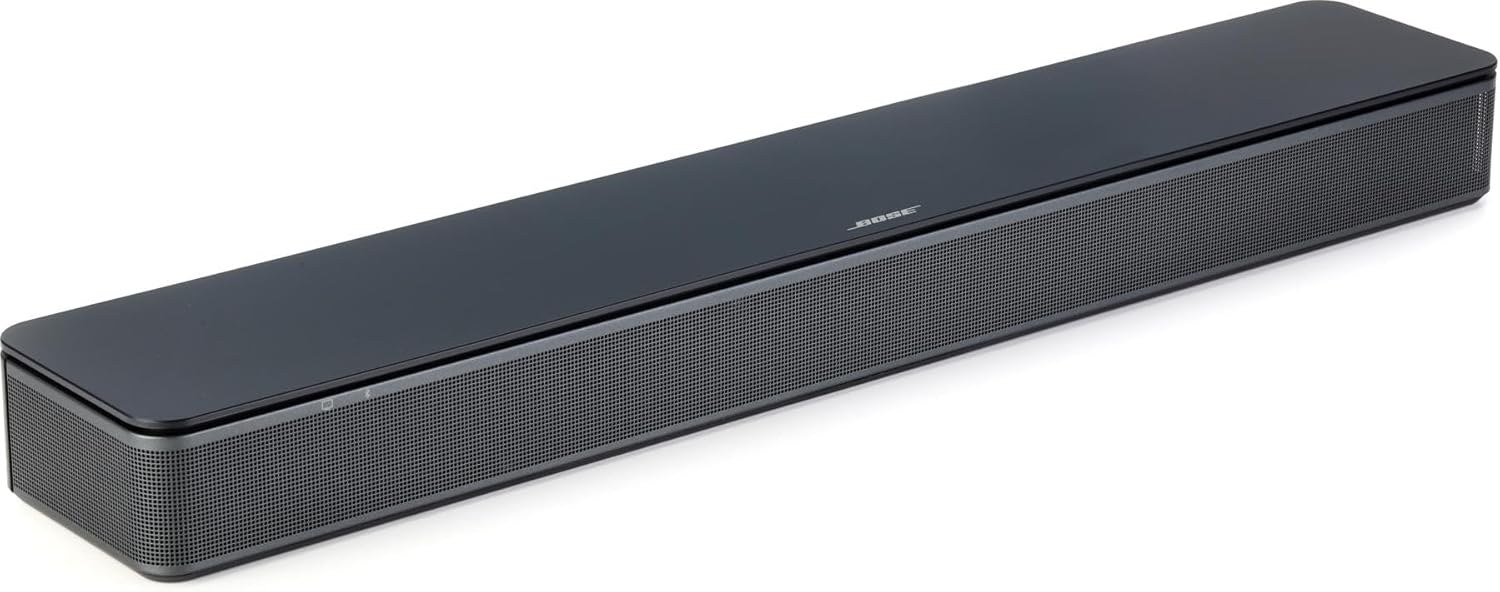
The Bose TV Speaker is a compelling solution for those seeking a simple and effective audio upgrade for their television. In a market saturated with complex surround sound systems and feature-laden soundbars, this device distinguishes itself through its user-friendliness and focused performance. It’s designed primarily to enhance clarity, particularly in dialogue, and improve the overall listening experience without overwhelming the viewer with unnecessary bells and whistles.
The core strength of the Bose TV Speaker lies in its ability to clarify speech. The dedicated center tweeter, combined with the angled full-range drivers, creates a soundstage that effectively separates vocals from the background noise and music often found in TV shows and movies. This is a particularly beneficial feature for individuals who struggle to hear dialogue clearly, or those who simply prefer a more distinct vocal presence. The inclusion of Dolby decoding further contributes to a richer and more immersive listening experience than typical TV speakers provide, though it’s important to note this isn’t a full-fledged Dolby Atmos experience.
Ease of setup is another key selling point. The simplicity of connecting via a single optical audio cable (included) or HDMI cable (sold separately) makes it accessible to even the most technophobic users. The HDMI-CEC functionality, allowing for seamless power and volume control through the existing TV remote, is a welcome addition. This integration minimizes the need for multiple remotes, contributing to a cleaner and more streamlined user experience. The inclusion of a dedicated remote provides additional control, including the handy “dialogue mode” and “bass” boost options, allowing for some level of customization.
While the Bose TV Speaker excels at clarifying dialogue and improving clarity, its limitations should be acknowledged. It’s not designed to deliver a room-filling, cinematic sound experience. Bass response, while enhanced by the “bass” button, is adequate but not particularly powerful without the addition of a separate subwoofer. The option to add the Bose Bass Module 500 or 700 is a significant advantage for those seeking a more impactful low-end presence, but this comes at an additional cost. The reliance on a wired connection for the subwoofer is a slight drawback in an increasingly wireless world.
Finally, the Bluetooth connectivity adds versatility, allowing users to stream music and podcasts directly from their smartphones or tablets. This turns the TV speaker into a multi-purpose audio device, enhancing its overall value. In conclusion, the Bose TV Speaker is a well-designed and executed product that delivers on its promise of improved TV sound clarity and ease of use. While it may not be the most powerful or feature-rich soundbar on the market, its simplicity, effective dialogue enhancement, and compact design make it an excellent choice for those seeking a straightforward and noticeable audio upgrade without the complexity or expense of a more elaborate home theater system.
✅ Pros
- High quality
- Good value
❌ Cons
- Pricey
- Heavy
Soundbar Buying Guide
Choosing the right soundbar can dramatically improve your home entertainment experience. Here’s a guide to help you navigate the options and find the perfect fit for your needs.
1. Size Matters: Consider the size of your TV and your room. A soundbar that’s too small will sound underwhelming, while one that’s too large might overwhelm the space. Measure the width of your TV and look for a soundbar that’s close in size. Larger rooms generally benefit from longer soundbars with more powerful drivers.
2. Sound Quality: This is paramount. Read reviews and, if possible, listen to soundbars in person before buying. Pay attention to clarity, bass response, and overall balance. Some soundbars are better suited for movies, while others excel with music. Consider what you’ll primarily be using it for.
3. Connectivity: Ensure the soundbar has the necessary inputs to connect to your TV and other devices. HDMI ARC (Audio Return Channel) is ideal for a clean connection, allowing audio to be sent from your TV to the soundbar. Optical and RCA inputs are also common. Consider Bluetooth for wireless music streaming and Wi-Fi for smart features.
4. Features: Soundbars offer a range of features. Dolby Atmos and DTS:X provide immersive surround sound. Voice assistant integration (e.g., Google Assistant, Alexa) allows for hands-free control. Subwoofer options (either built-in or separate) enhance bass performance. Some models offer multi-room audio capabilities. Consider which features are most important to you.
5. Budget: Soundbars range in price from budget-friendly to high-end. Determine your budget upfront and prioritize features and sound quality within that range. Remember that a slightly more expensive soundbar with better sound quality will likely provide a more satisfying long-term experience.
6. Consider a Subwoofer: If you enjoy movies with impactful bass, a soundbar with a dedicated subwoofer is highly recommended. While some soundbars have decent bass performance on their own, a subwoofer will provide a deeper, more room-filling sound.
7. Ease of Use: A user-friendly interface and remote control are essential for a positive experience. Look for soundbars with clear and intuitive controls.
By carefully considering these factors, you can choose a soundbar that will significantly enhance your audio experience and provide years of enjoyment.
FAQ
- Q: What is HDMI ARC, and why is it important?
- A: HDMI ARC (Audio Return Channel) allows audio to be sent both ways through a single HDMI cable between your TV and soundbar. This simplifies setup and reduces cable clutter. It also often allows you to control the soundbar’s volume with your TV remote.
- Q: Do I need a separate subwoofer with my soundbar?
- A: It depends on your preferences and room size. If you want deeper bass for movies and music, a separate subwoofer is highly recommended. Smaller rooms might be okay with a soundbar that has decent bass performance built-in.
- Q: What is Dolby Atmos, and how does it improve sound quality?
- A: Dolby Atmos is an immersive audio technology that creates a three-dimensional soundscape. It adds height channels to the traditional surround sound setup, making sounds appear to come from above, resulting in a more realistic and engaging experience.
- Q: Can I connect my soundbar to my phone or tablet?
- A: Yes, most soundbars have Bluetooth connectivity, allowing you to wirelessly stream music from your phone, tablet, or other Bluetooth-enabled devices.
- Q: How do I mount a soundbar to the wall?
- A: Many soundbars come with mounting brackets or have keyhole slots for wall mounting. Follow the manufacturer’s instructions carefully. Make sure to use appropriate hardware for your wall type to ensure the soundbar is securely mounted.
The [Soundbar Name] offers a compelling audio upgrade, particularly if you’re looking for clearer dialogue and a wider soundstage than your TV speakers can provide. Its strengths lie in [mention 2-3 specific strengths, e.g., ease of setup, clear vocal reproduction, impressive bass for its size]. However, audiophiles seeking truly immersive surround sound may find it lacking, and the [mention a specific weakness, e.g., remote could be more intuitive, limited connectivity options, price is a bit high for the features offered] might be a dealbreaker for some. Ultimately, if you prioritize [mention the ideal user/situation, e.g., simple setup and improved clarity for movies and TV shows in a small to medium-sized room], the [Soundbar Name] is a worthwhile investment. Otherwise, consider exploring alternatives with more robust surround sound capabilities or a lower price point.